
Which Parameters of a Grate Incinerator Should You Adjust to Strengthen In-Furnace Airflow Disturbance?
Secondary-air parameters
Air volume: Increasing the secondary-air volume can markedly strengthen in-furnace airflow disturbance. Raising it appropriately makes the secondary air mix more intensely with the primary air and combustion flue gas in the furnace. For example, as the secondary-air volume is gradually increased from a small value, the turbulence of the gas flow rises noticeably, letting unburned particles and gases spread better in the furnace and enlarging the contact area with oxygen to promote combustion. However, the volume must not be excessive, or the in-furnace temperature may drop too quickly or the flame may be blown out.
Air velocity: Raising the secondary-air velocity enhances its penetration into the in-furnace gas flow. A higher velocity lets the secondary air reach deeper into the combustion zone and break up the original stratification of the gas flow. For instance, by adjusting the design of the secondary-air nozzles or the air pressure so the secondary air is injected at higher speed, you can effectively disturb the flame and flue gas and deliver oxygen to zones where combustion is insufficient.
Direction and angle: Properly adjusting the direction and angle of the secondary air is crucial to strengthening in-furnace airflow disturbance. Depending on the burning conditions and flame shape, the secondary air can be injected into the furnace at different angles. For example, injecting it from the side at an upward slant pushes the flue gas and unburned matter in the combustion zone upward and sideways, creating a circulating flow in the furnace that enhances the overall gas-mixing effect.
Primary-air parameters (working together with the secondary air)
Air distribution: In a grate incinerator, the primary air mainly supplies the oxygen needed in the early stage of waste combustion. By distributing the primary air sensibly across different zones of the grate, you can change the gas-flow pattern within the waste bed. For example, appropriately increasing the primary air at the waste feed end lets the waste dry and start burning quickly, and the resulting flue gas works better with the secondary air downstream to create good airflow disturbance. At the same time, dynamically adjusting the primary-air split between the front and rear of the grate according to burning progress also helps strengthen the overall in-furnace airflow disturbance.
Velocity adjustment: Suitably adjusting the primary-air velocity affects the gas-flow state in the waste bed. A lower velocity may make it hard for the primary air to penetrate a thick waste bed, while too high a velocity can blow away some unburned waste particles. Through trials and operating experience, find a suitable primary-air velocity that forms good ventilation channels in the waste bed and works with the secondary air to strengthen in-furnace airflow disturbance.
Grate movement parameters
Speed: Speeding up the grate increases how often the waste is turned over in the furnace. When the grate moves quickly, the waste is continually turned and mixed, so gas inside the waste bed escapes more easily and mixes better with the air in the furnace. For example, for waste that is moister or has larger particles, suitably increasing the grate speed prevents the waste from piling too thickly, keeps the bed well aerated, and thus strengthens in-furnace airflow disturbance.
Mode (e.g., reciprocating or rotary): Different grate movement modes also affect airflow disturbance. A reciprocating grate moves the waste back and forth, while a rotary grate rolls it in a circular path. Based on the waste characteristics and in-furnace combustion requirements, choosing a suitable movement mode or an optimized combination effectively improves the mixing between waste and air, and thereby strengthens in-furnace airflow disturbance.
Furnace structure parameters (indirect effects)
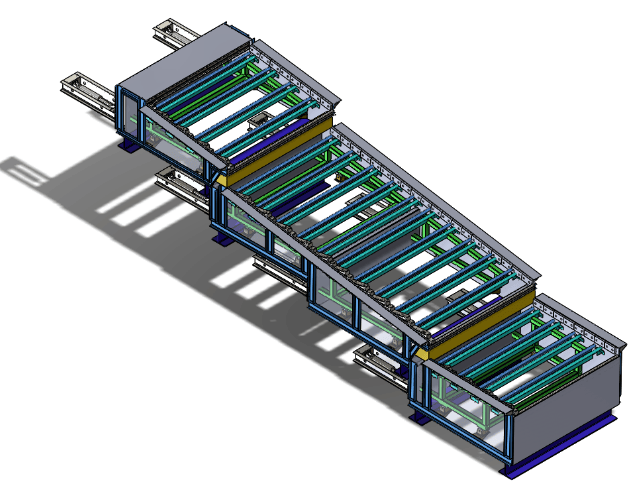
Furnace height and shape: A taller furnace gives the gas flow a longer path and more time and space to mix and become disturbed. A sensible furnace shape, such as a converging design or one with internal flow-guiding structure, can steer the gas flow and promote circulation in the furnace. For example, in a converging furnace, the cross-section shrinks as the flue gas rises, the gas speeds up, and this favors stronger airflow disturbance so unburned matter burns more fully.
Position and size of the air inlets and outlets: Optimizing these can improve the gas-flow distribution in the furnace. Well-placed inlets let the primary and secondary air enter the furnace more evenly, while the size and position of the outlet affect the negative pressure and gas velocity. For example, placing the outlet at a suitable spot near the top of the furnace and adjusting its size according to the air demand controls the direction and speed of the gas flow, enhancing airflow disturbance.