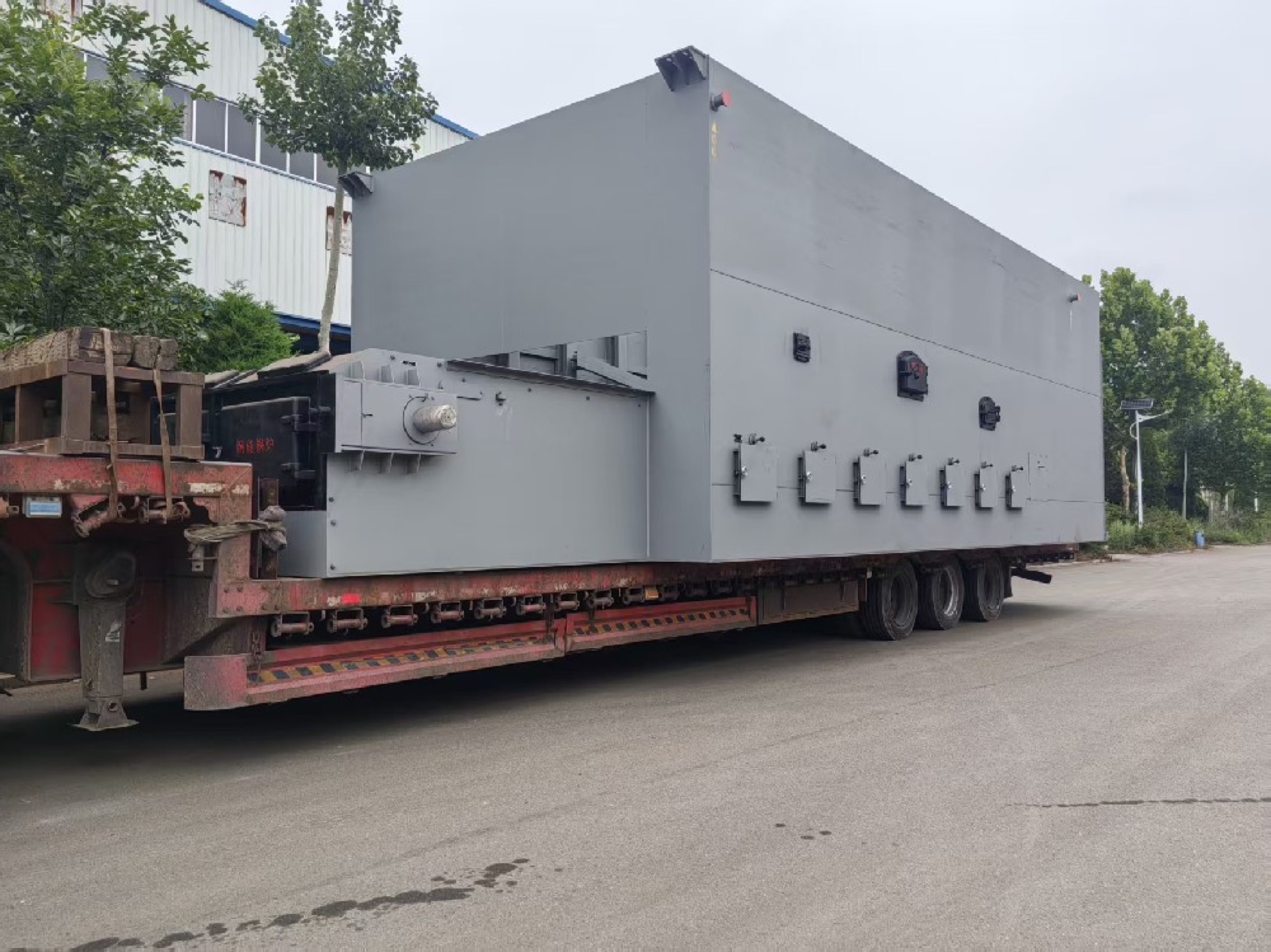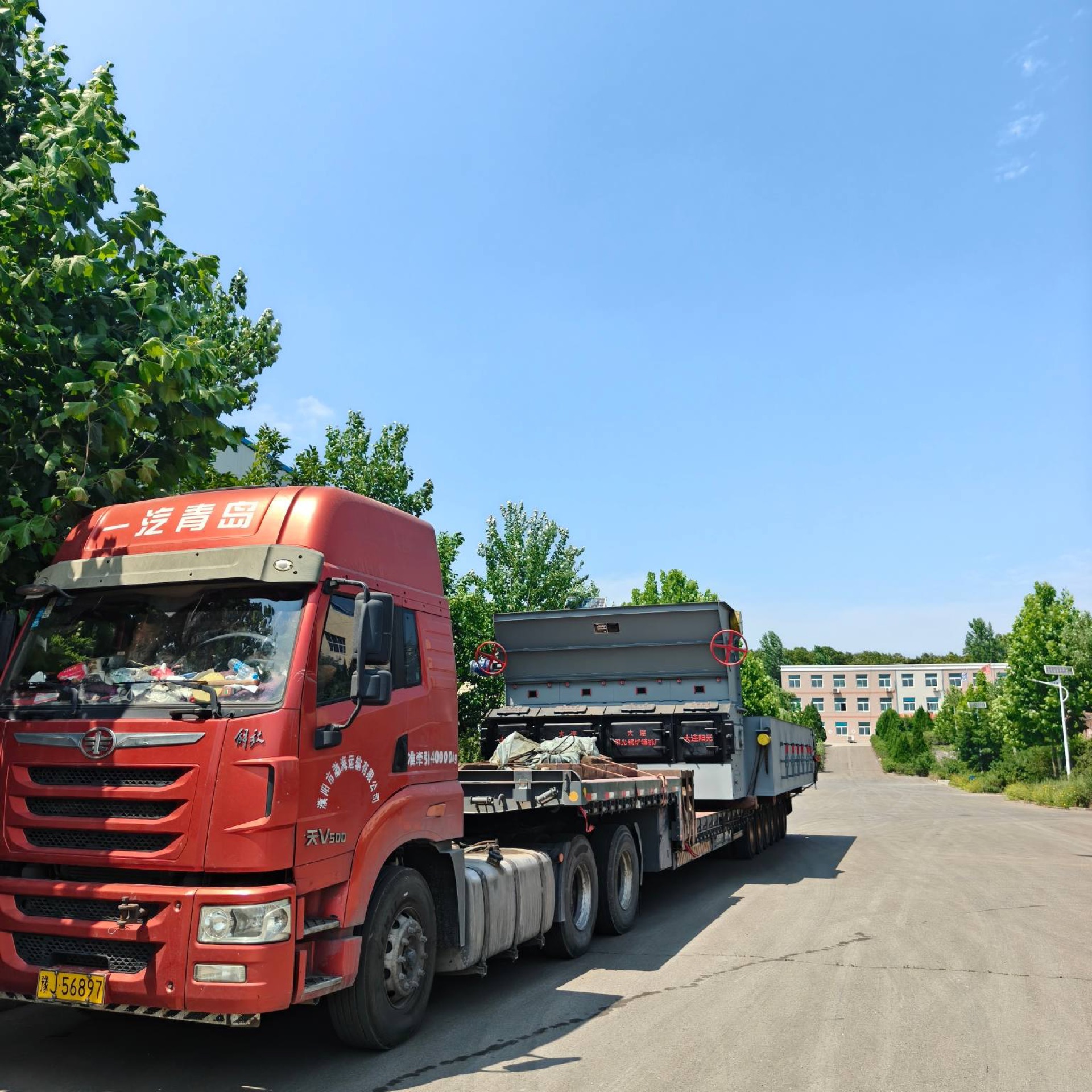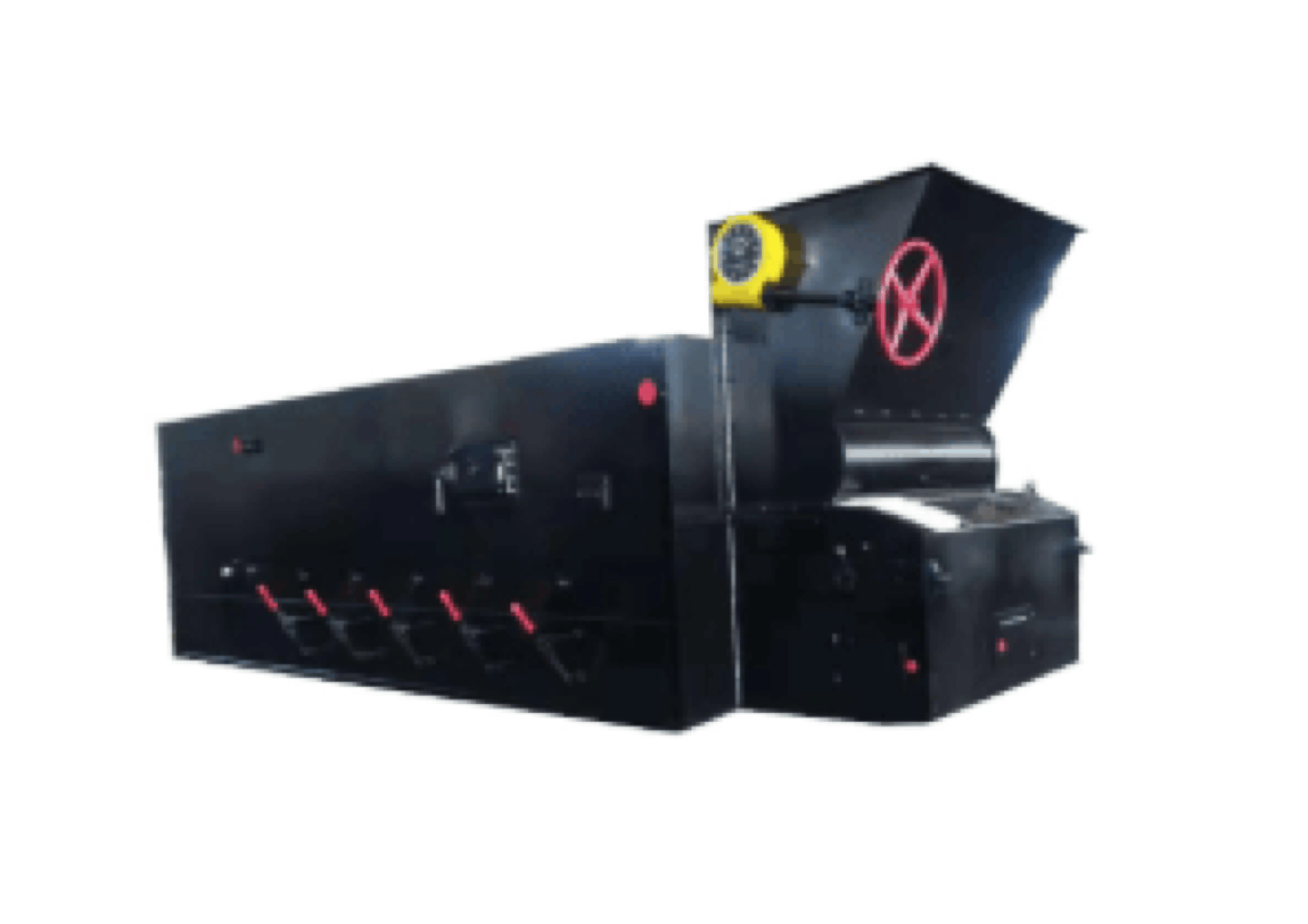

Grate-type incinerator
Structure and working principle
Waste enters the incinerator through the feed inlet and lands on the grate. It first goes through the drying stage, in which the moisture in the waste is evaporated by the high-temperature hot gas in the furnace. As the grate moves, the waste is slowly pushed forward and enters the combustion stage. In the combustion stage, the waste burns fully with an ample air supply, producing high-temperature flue gas and heat. Finally, the residue after combustion is discharged through the end of the grate, while the high-temperature flue gas enters the downstream flue gas treatment system.
A grate-type incinerator mainly consists of a set of grates, which usually include fixed grates and moving grates. The fixed grate supports the fuel, while the moving grate can be driven by a mechanical device to move from side to side or back and forth. The shapes and arrangements of the grate bars are diverse; some interlock with each other like fish scales. This design prevents waste from falling through the gaps between the grates and, during movement, can provide a certain stirring effect on the waste.
Below the grate there is a ventilation system that can feed air evenly into the waste layer above the grate. According to the different combustion stages, the ventilation system can adjust the air supply to different zones, for example supplying less air during the drying stage and more air during the combustion stage.
Grate structure:
Working principle:
Characteristics and advantages
Because the combustion process is relatively stable, the temperature and flow rate of the high-temperature flue gas produced are also relatively stable, which is favorable for heat recovery and utilization. The heat in the flue gas can be converted into steam through a waste-heat boiler for power generation or heating. For example, in some large waste-to-energy plants, the steam produced by grate-type incinerators can drive turbines to generate electricity, realizing the resource utilization of waste.
The movement of the grate enables the waste to be constantly turned over and mixed, allowing the waste to come into full contact with the air and ensuring the stability of the combustion process. This even combustion approach can effectively avoid local overheating or incomplete combustion. At the same time, by adjusting the movement speed of the grate and the ventilation volume, the combustion process can be flexibly controlled according to the calorific value and quantity of the waste, enabling the incinerator to operate stably under different operating conditions.
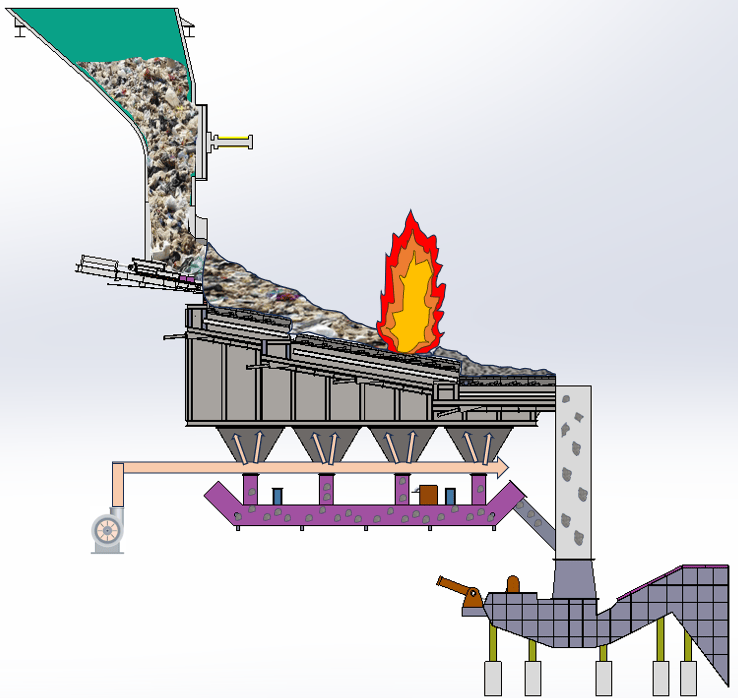
Process flow diagram
It is capable of handling waste with complex composition, varied shapes and greatly changing moisture content. Both municipal solid waste and some industrial waste (such as packaging materials and wood scraps) can be incinerated in a grate-type incinerator. For example, for kitchen waste containing a relatively large amount of moisture, the slow movement of the grate and the preliminary drying process can gradually bring the waste to a good combustion state.
Adaptation to multiple waste types:
Good combustion stability:
High heat recovery efficiency:
Application fields and scenarios
For combustible waste produced by some industrial enterprises, the grate-type incinerator can also carry out co-processing. For example, a waste incineration plant near a paper mill can receive industrial waste such as paper scraps and waste packaging materials from the paper mill and incinerate it together with municipal solid waste. This not only improves the utilization efficiency of the incinerator, but also reduces the processing cost of industrial waste.
It is one of the main pieces of equipment for the incineration treatment of municipal solid waste. In a municipal waste treatment plant, a large amount of household waste collected from residents is sent to the incinerator for treatment. The grate-type incinerator can effectively reduce the volume of the waste, convert the organic matter in the waste into harmless carbon dioxide and water vapor, and at the same time produce electrical or thermal energy, relieving the energy pressure of the city.
For example, a waste incineration plant in a medium-sized city, using a grate-type incinerator, can treat several hundred tons of household waste every day, greatly reducing the burden on landfills and, through power generation, supplying electricity to part of the city.
Municipal solid waste treatment:
Industrial waste co-processing: