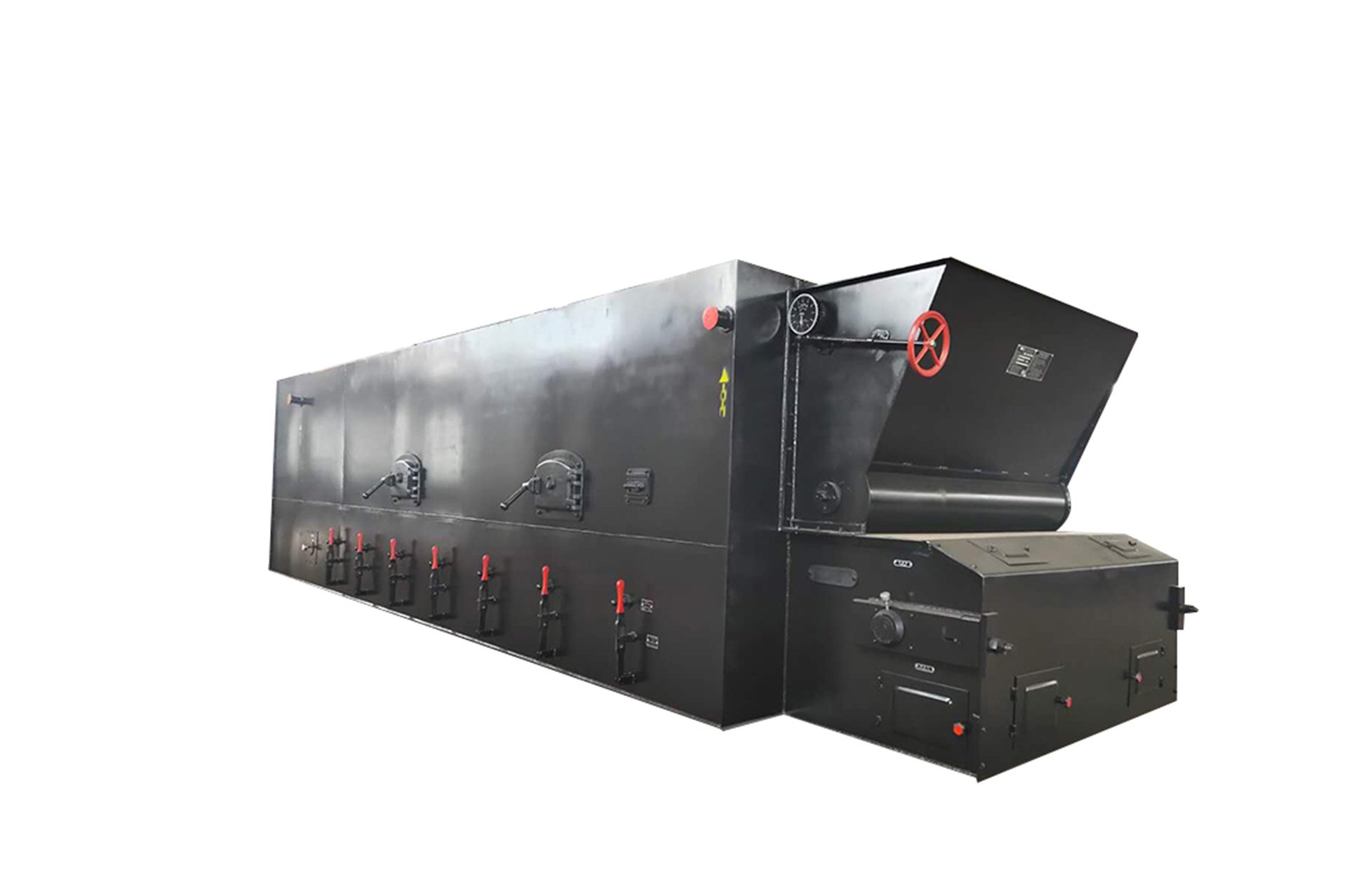

Biomass and Coal on a Reciprocating Grate: Moisture Spread and Burning Time
Whether a reciprocating grate can burn biomass is not a simple yes or no; it depends which biomass. Biomass and coal differ on the grate in two main ways: the spread of moisture, and how long the fuel keeps burning. Both decide how the preheating section is laid out and how the air is zoned.
One: the moisture spread, from pellets to bark
Pelletised or briquetted fuel has been dried and pressed, so it is low in moisture and ignites as soon as it enters. Raw material such as bark, branches and straw carries much more water and has to be dried in the preheating zone down to a burnable condition.
For one grate to serve both, the dwell time required in the preheating zone is exactly opposite: dry fuel must be pushed on quickly, wet fuel must stay longer. This is why zoning the speed on a biomass grate is not optional, as covered in the article on drive arrangements.
Our reciprocating grate coal specification sets moisture at 15% maximum, with 5–10% preferred. Raw biomass usually runs well above that ceiling, so the preheating length and air distribution of a biomass grate cannot simply copy a coal design.
Two: burning time, volatiles first and fixed carbon slowly
In the main combustion zone coal normally burns volatiles first and fixed carbon afterwards, with a long tail. Biomass carries a higher volatile fraction, burns quickly, releases its calorific value in a burst and finishes in clearly less time.
The fire line therefore sits differently. With coal the bed needs longer on the grate and the fire line sits further back. With biomass the front end is violent and the back end finishes fast, so if the pushing rhythm is still set for coal, the biomass tends to burn off in the preheating zone and leave unburnt carbon at the burnout end.
Three: what it means for the grate design
First, the preheating zone needs drying capacity: a longer section and separately adjustable air, or wet fuel never reaches the main combustion zone.
Second, zoned air and zoned speed adjustment matter more. Biomass varies from batch to batch, and a single speed and air setting for the whole grate rarely burns every batch through.
Third, the bar material follows the fuel rather than the grate model. Two grates of the same rating often take different grades for coal and for biomass; the grade table is on the grate spare parts category page.
Four: what to do when buying or upgrading
If a boiler will burn both coal and biomass, put the moisture range of both fuels into the specification, not a single average figure.
Size the grate length, the feeding method and the drive for the harder of the two fuels, and adjust in operation to what actually arrives. A grate sized for coal alone and later switched to biomass typically ends up short of output with high carbon in the ash.
We supply reciprocating grates in all ratings, with grate bars, side seals and matching parts, dispatched from a partner factory, and we can check the preheating section and air arrangement against the moisture range of your fuel.