
Grate Bar Failure Modes: Melting, Oxidation, Thermal Cracking and Burn-Through
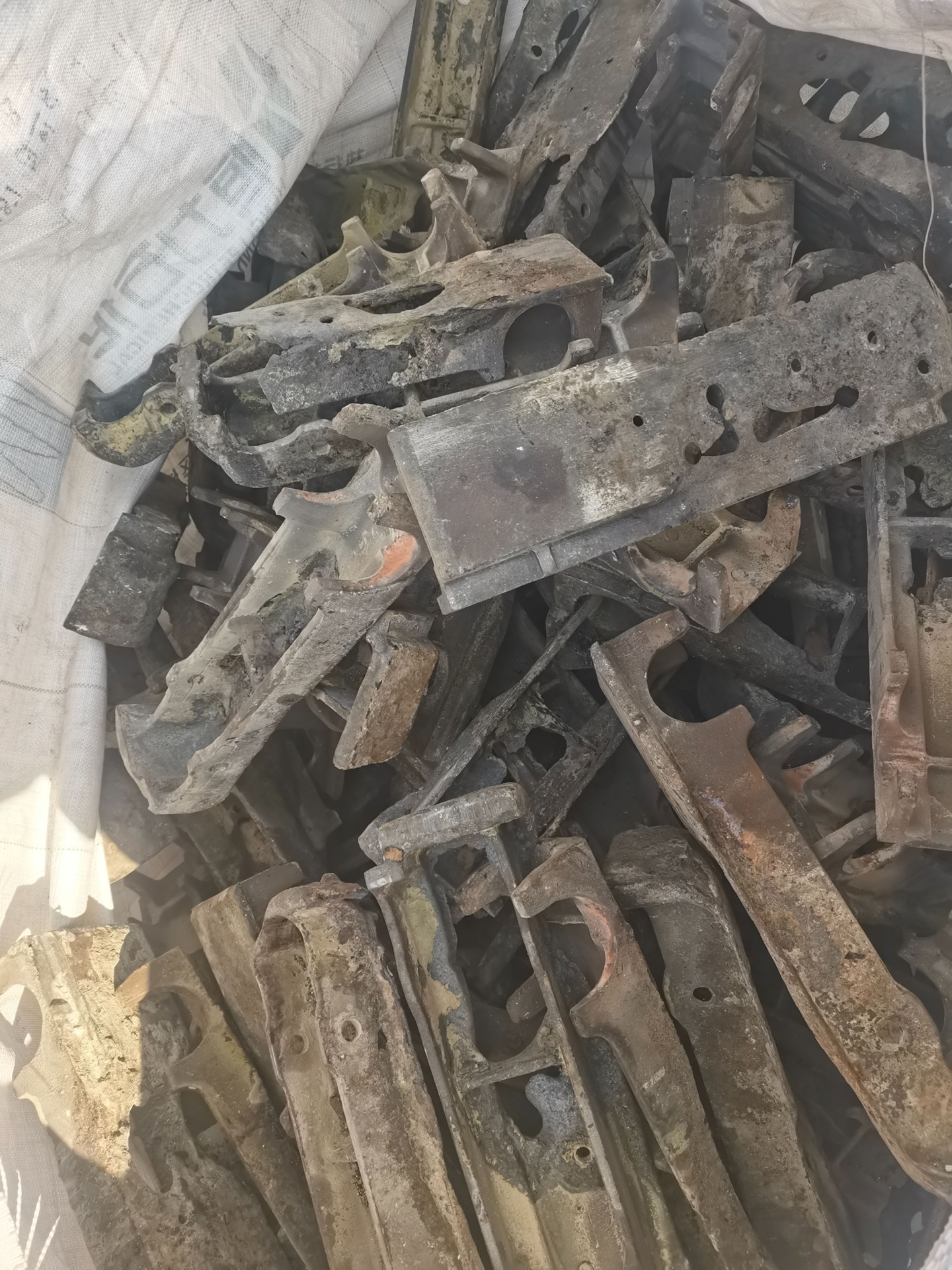
When a biomass grate throws away a full set of bars after less than a year, the replacement decision is usually made on price alone, and the same failure comes back. The four damage patterns below look similar in a photograph and are completely different in cause. Identifying which one is present is what decides whether the answer is a better grade, a change in air distribution, a change in fuel, or a change in operating practice.
1. Melting and slag welding
The bar loses material from the top face, but the loss is smooth and rounded rather than rough: edges are glazed, the corners round off, and a greenish-brown glassy layer may sit in the valleys. Cross-sections taken from such bars show a deposit layer rich in potassium and chlorine, a porous iron-rich oxide beneath it, and a chromium-depleted substrate under that.
The mechanism is not simple overheating. Chlorine forms volatile metal chlorides at the oxide–metal interface, those chlorides are re-oxidised and the chlorine is released to attack again, so a protective oxide film never closes. In parallel, potassium reacts with siliceous ash to form low-melting potassium silicates which, at grate temperature, are molten or semi-molten and act as a flux, dissolving and penetrating the film. Molten slag then washes the weakened layer away with the moving bed. Straw, wheat straw, rice straw and empty fruit bunch are the classic fuels for this, and their ash fusion temperatures are low. The background is set out in which fuels sinter and slag grate bars.
What changes the outcome: keep the bar surface below the softening temperature of the ash, control where the main combustion zone sits through air distribution, grate speed and bed thickness, and raise chromium in the grade where slagging is unavoidable. More air is not the answer; a hotter, more oxidising local zone accelerates the same chain.
2. Oxidation and scaling
Here the loss is uniform and layered: thin flakes of scale lift off the face, the surface shows honeycomb pitting, and the whole section thins rather than one spot melting. It is the pattern of a bar running above its grade’s ceiling for long periods, in an oxidising atmosphere.
Cast iron grades have a hard ceiling of 1100℃ in the standard system, and in service the practical limit is lower once thermal cycling is counted. Above that, the oxide grows fast, spalls, and regrows, and each cycle eats metal. High excess air makes it worse at the same temperature, because the oxygen partial pressure at the surface is higher. Burners or air jets aimed straight at a bar do the same locally.
What changes the outcome: verify the actual surface temperature rather than the furnace temperature, cut excess air back to the combustion limit, and move to a grade with a service temperature above the duty. The five common grades and their temperature basis are compared in choosing a grade by service temperature.
3. Thermal cracking and fatigue
Cracks cross the bar rather than follow its length, often starting at a section change, at a pin hole, at the root of an engagement tooth, or at the rim of an air hole. Dense fine crazing over the hot face is the early stage; a through crack is the end stage. Bars that crack usually still have their full thickness, which is what separates this pattern from the two above.
The driver is the number and size of temperature cycles, not the peak temperature. Frequent starts and stops, cold air admitted onto hot bars during a shutdown or a partial-load excursion, water or steam cooling that is interrupted, and a bed that alternately covers and exposes a zone all do it. A perforated face is more vulnerable, because every hole rim is a stress raiser and the metal between holes reaches a higher temperature than the surrounding face.
What changes the outcome: reduce cycling where possible, preheat on restart, avoid cold-air shocks, and choose a grade with more nickel where cracking dominates, since nickel raises ductility and thermal-fatigue resistance. Cracks should never be welded repeatedly on a working bar: the weld heat-affected zone becomes the next crack initiation site.
4. Burn-through and local hot spots
Burn-through is a hole melted or eroded through the face at one location, with the rest of the bar still sound. It almost always marks a path where air escaped at high velocity: a widened gap between two bars, a missing or displaced bar, a gap at the side seal, a warped bar lifting its neighbour, or a hole pattern that sits over a compartment boundary so that all the air of that compartment passes through a small area.
The progression is fast. Once the local jet exists, the metal around it thins within weeks, the gap widens further, more air passes, and the bar fails. It is a distribution fault, not a material fault, so a more expensive grade will not stop it.
What changes the outcome: gap control at every overhaul, replacement of warped or displaced bars rather than straightening, side seals kept in contact, and matching the hole pattern to the wind-box compartments. The checklist for judging whether a bar is already past the point of replacement is in how to determine whether grate bars need replacement.
5. Telling them apart
| Pattern | Where it appears | Metal loss | Most likely cause | What to change |
|---|---|---|---|---|
| Melting and slag welding | Top face of the main combustion zone, worst at the hottest rows | Smooth, rounded, glazed; glassy deposit in the valleys | Low ash fusion from potassium and chlorine, surface above the ash softening point | Air distribution, grate speed, bed depth; higher chromium grade in the main zone |
| Oxidation and scaling | Whole hot face, often uniform along the grate | Uniform thinning with layered scale and pitting | Surface temperature above the grade ceiling, high excess air | Grade with higher service temperature, excess air reduced |
| Thermal cracking | Section changes, pin holes, tooth roots, hole rims | Little or none before failure | Too many thermal cycles, cold-air shock, stress raisers | Lower cycling, preheat, higher-nickel grade, no repeated welding |
| Burn-through | One point, usually where air escapes | Local hole, bar otherwise sound | Gap growth, displaced bar, seal failure, hole pattern over a compartment divider | Gap and seal control, replace deformed bars, re-match hole pattern |
6. Why straw duty kills a set in under a year
Three effects overlap on straw. The fuel’s ash is rich in potassium, chlorine and silicon, so the ash is aggressive and fuses low. The main combustion zone runs hotter than the drying and burnout zones, so the same grade that survives at the tail fails in the middle. And the char from straw is fine and light, so operators tend to run a thin, fast bed with more air to keep it burning, which raises the surface temperature exactly where the bars are already hottest.
That is why the practical answer is usually a material change on part of the grate rather than on all of it. Keeping the original outline and dimensions, and moving the main combustion zone rows to a heat-resistant steel casting such as Cr25Ni20 (310S), raises the service temperature above the cast-iron ceiling of 1100℃ and adds nickel for thermal-fatigue resistance; the drying and burnout rows can stay on a cheaper grade such as Cr26Ni12 or RTCr20. Replacing the whole set in one grade costs more and buys nothing at the tail.
One warning on mixing: mixing grades between adjacent rows is acceptable when the outline, pitch and height are identical. Mixing two bar geometries, or mixing holed and plain bars to save money, is not, for the reasons given in will holed bars fit an existing grate.
7. What to record before the next order
Photograph the set as it comes out, with the position of each damaged bar marked on a simple sketch of the grate. Measure the remaining thickness at the thinnest point of three bars per zone. Record the service life in hours and the number of starts in that period. Note the fuel mix over the same period, including the share of straw, the moisture and any fuel change just before the failure. Those four records separate the patterns above without a laboratory, and they are what a supplier needs in order to quote a grade instead of a price.
We supply moving and fixed bars, side seals and matching parts for biomass reciprocating grates, dispatched from a partner factory in the grades named above, with dimensions and material checked against a drawing or a measured sample.
References
- Khongkaew W. et al., Failure analysis and degradation mechanisms of GX130CrSi29 grate bars in a biomass-fired furnace
- Evaluation of Combustion Grate Damage: A Comprehensive Review of Grate Deterioration in Biomass Power Plants
- GB/T 9437, Heat resistant iron castings
- GB/T 8492, Heat-resistant steel and alloy castings for general applications