
Why Reciprocating Grate Bars Get No Return Cooling, and Why the Material Matters More
A chain grate bar travels with the chain under the furnace and gets a chance to cool on its return run. A reciprocating grate bar does not take that route: it sits in the moving and stationary frames and stays inside the combustion zone. That structural difference is why the material of a reciprocating grate bar cannot rely on cooling to make up for the heat.
Chain grate bars have a return run, reciprocating bars do not
A chain grate runs as a loop. After a bar has crossed the combustion section it follows the chain down to the return run underneath, then comes back to the front to be loaded again, so it does get away from the hot zone once per cycle.
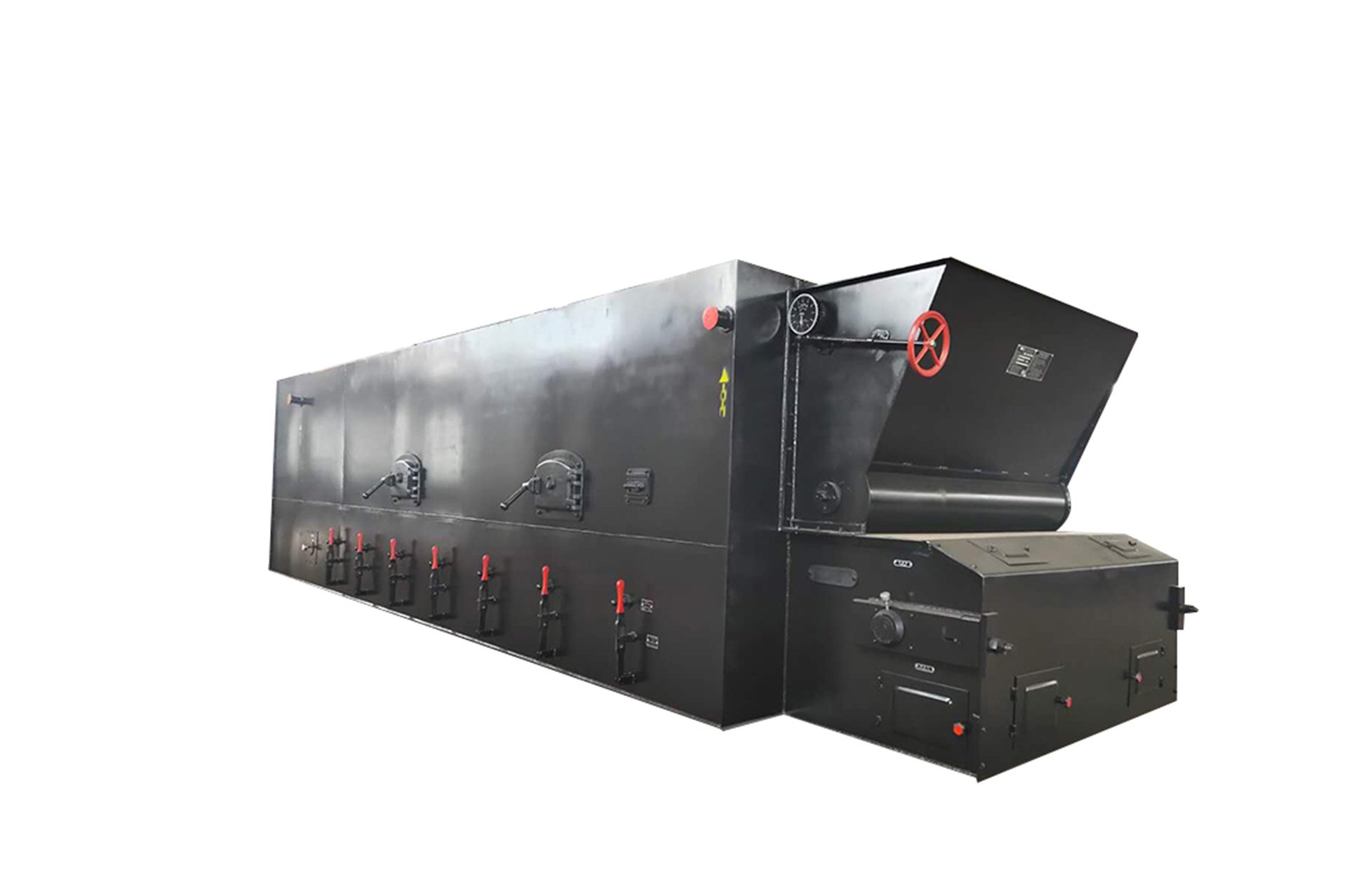
A reciprocating grate has no such return. The moving bars slide back and forth over the fixed bars and push the fuel down by crowding and by the step drop, and the bars themselves never leave the furnace. One pass of combustion follows the next with no pause in between.
So the bars stay hot for their whole service life
The bars lie under the fuel bed: hot coke above them, air from the wind boxes below. They carry not only high temperature but also thermal shock from the temperature swings of the bed, plus wear from the crowding and rubbing of the fuel.
Once a bar deforms or cracks, the air slots deform with it, fall-through and cross-flow appear, and combustion goes out of control quickly. That is why grate bars are usually the first item in the maintenance record of a reciprocating grate.
Why the material has to be settled together with the fuel
The fuel sets two things: the temperature level of the bed and the size of its swings. High-calorific coal and biomass run hotter in the main combustion zone, while fuel with high moisture and an unstable calorific value makes the furnace temperature swing more often and the thermal shock denser.
So when a grate changes fuel, the bar grade often has to change with it. Grades we commonly supply cover a service range from 480℃ to 1500℃, a wide spread: too low a grade gives a short bar life, too high a grade is money spent for nothing. The full grade table sits on the grate spare parts category page.
Order of judgement
Three steps work well. First fix the position of the part and its actual working temperature, since the preheating, main combustion and burnout zones do not run at the same temperature. Then look at the fuel: coal or biomass, and how far its calorific value and moisture swing. Last, confirm grade and dimensions against the grate drawing and the measured dimensions of the old part.
One grate can also use different grades by zone: a high-temperature grade in the main combustion zone and standard grades elsewhere costs less than upgrading the whole grate.
We supply moving and fixed grate bars for reciprocating grates, together with side seals and link rods, dispatched from a partner factory, and we can check the grade against your grate model and fuel.