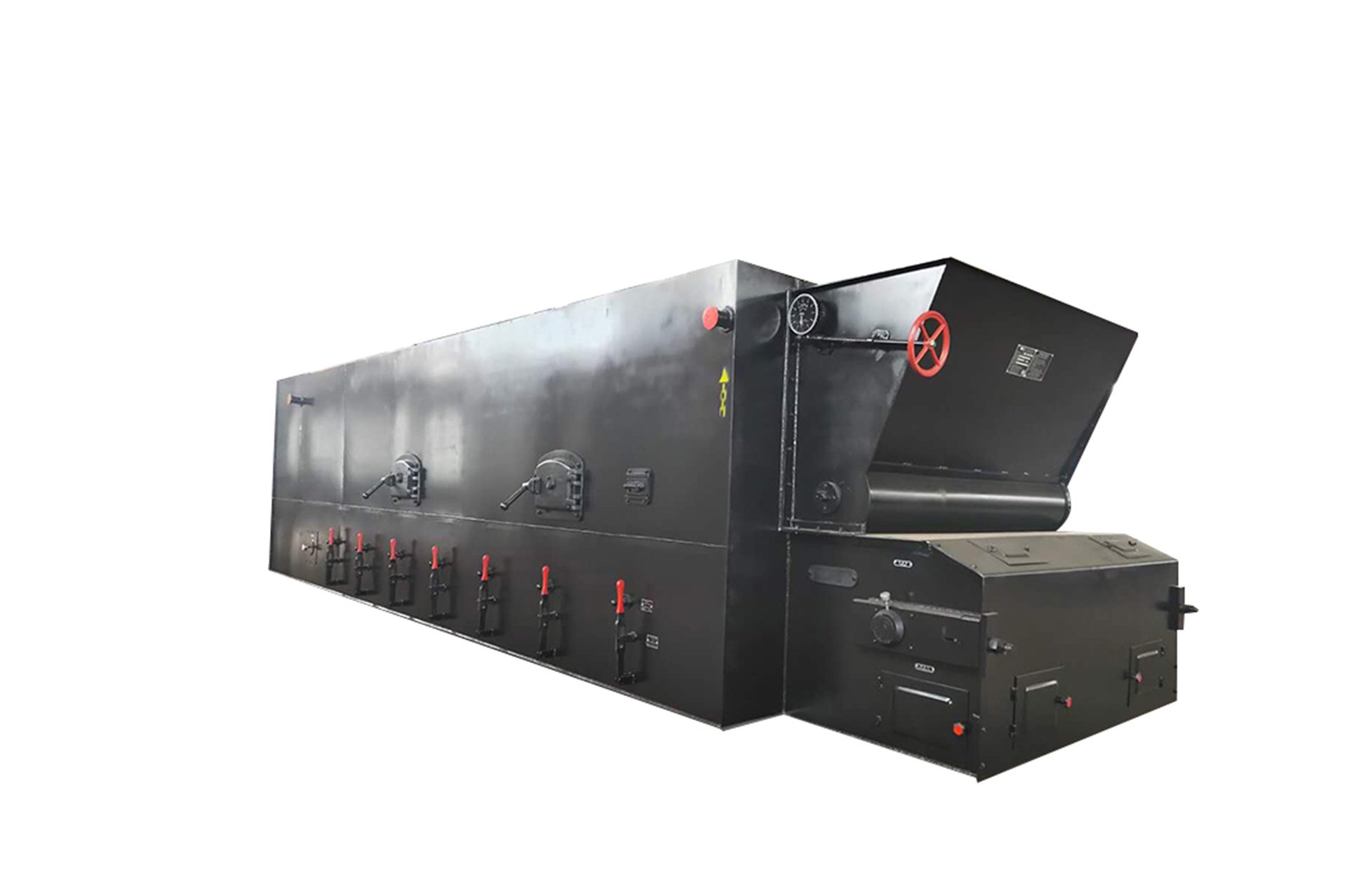

Setting the Inclination of an Inclined Reciprocating Grate: 5°–15° and the Usual 15°
The inclination of an inclined reciprocating grate is a parameter that gets asked about often and answered vaguely just as often. The common range is 5°–15°, with 15° usual where space allows. Why that range applies, and when to go lower, follows from what the angle actually affects.
Three things the angle affects
The first is how the fuel travels down. A steeper angle lets the bed slide along the incline more by its own weight, so less of the work falls on pushing. A shallower angle leaves more of it to the reciprocating bars, and resistance rises.
The second is wear. Sliding and crowding both wear the bars, and a shallower angle with more pushing puts more load on the bars and beams.
The third is whether the fuel moves at all. At too shallow an angle the fuel tends to sit on the steps, heaps form locally, the heaped fuel burns incompletely and the fire line becomes uneven.
Why 15° is the usual recommendation
Where the furnace has the space, 15° is the usual figure: grate resistance is low, wear is low, fuel travels smoothly and combustion is steadier.
But 15° is not a hard rule. A steeper angle changes the drop and the feeding height the layout needs, which a tight furnace may not accommodate, while a shallower angle slows the fuel and lengthens its dwell time, a route some designs take for high-moisture fuel and one that has to be worked out with the grate model.
The inclination column in our parameter table
In our reciprocating grate parameter table the inclination column reads “user-defined”. The reason is simple: the figure is tied to the grate model, the fuel and the feeding method, so the supplier does not set it alone.
The other figures in the same table can be read alongside it: an air section ratio of 6–8%, and a stroke generally of 70–110 mm, shorter for good coal and longer for poor coal.
How to settle it
Give the partner factory three things and the angle can be fixed. The first is fuel type and moisture, including the range when moisture swings widely. The second is usable furnace height and the space in front and behind. The third is the feeding method, whether a pusher feeder or a coal hopper with a coal gate.
Once the factory has drawn the grate, the angle is confirmed together with stroke and air section ratio. We supply reciprocating grates in all ratings, dispatched from a partner factory, and we can check angle and stroke together with your grate model and fuel.