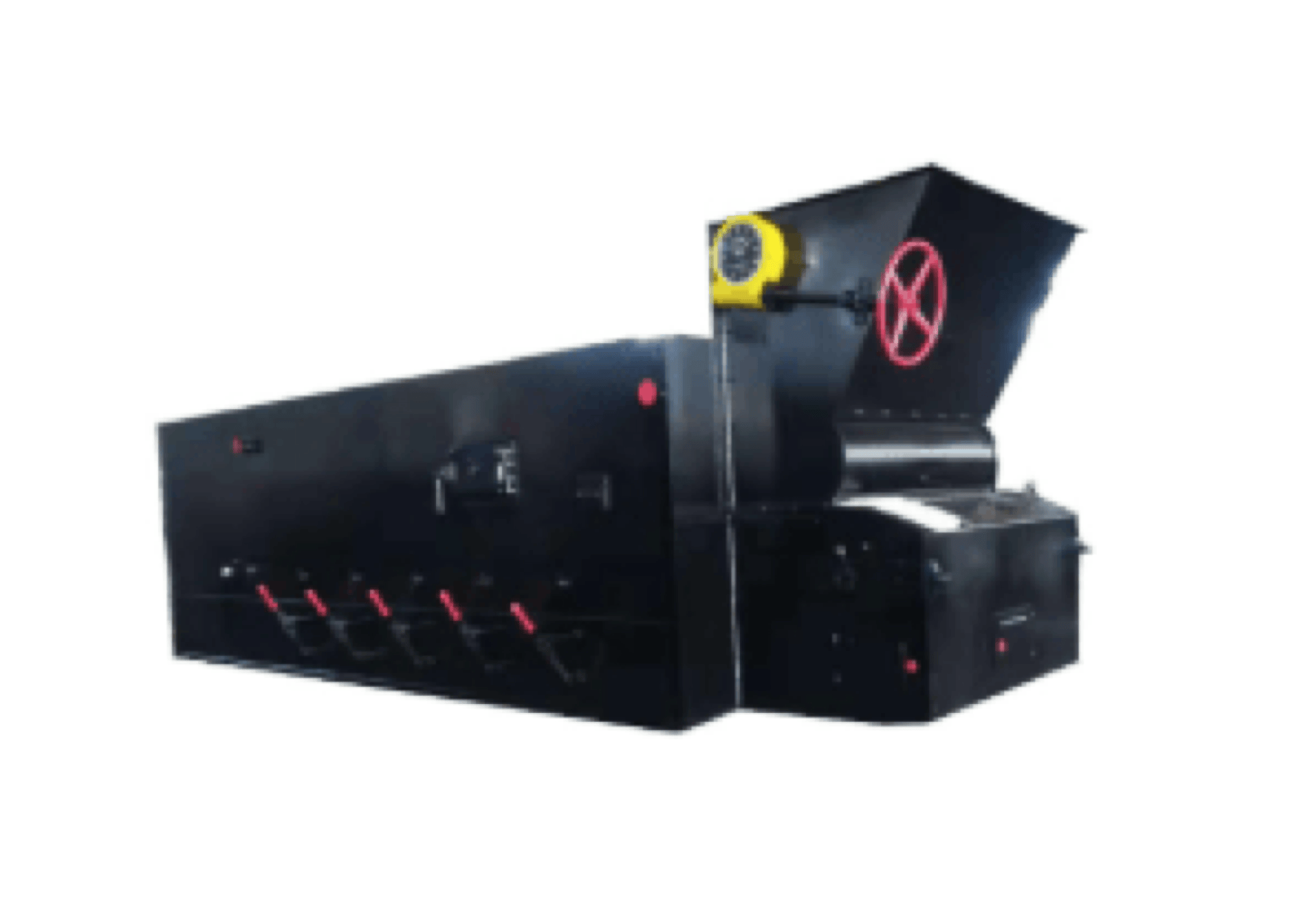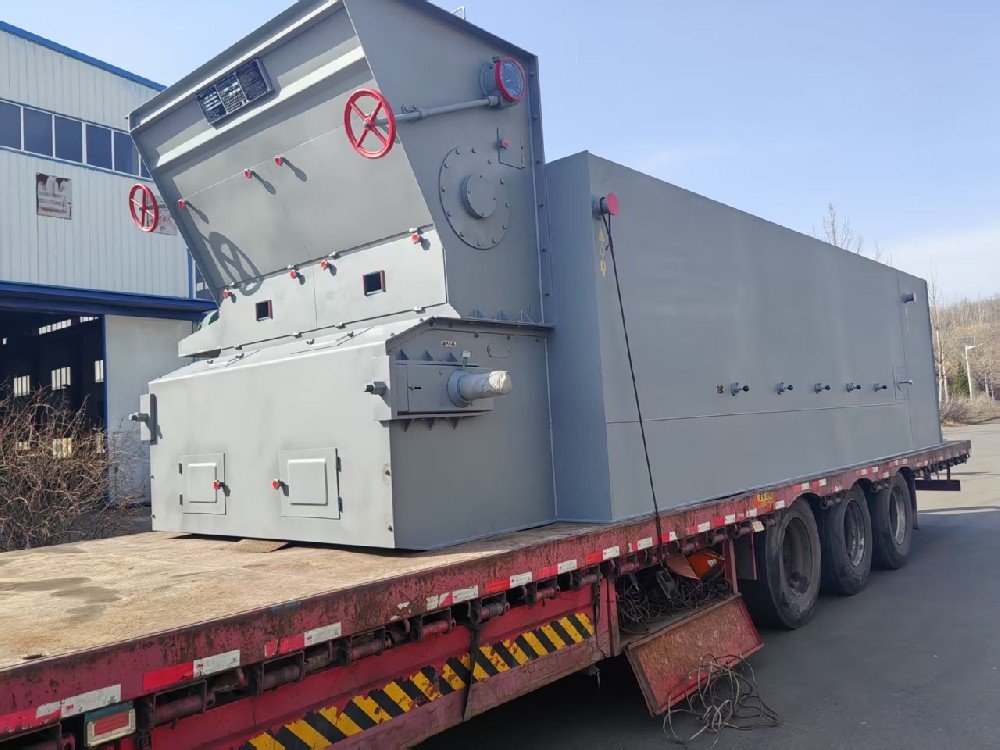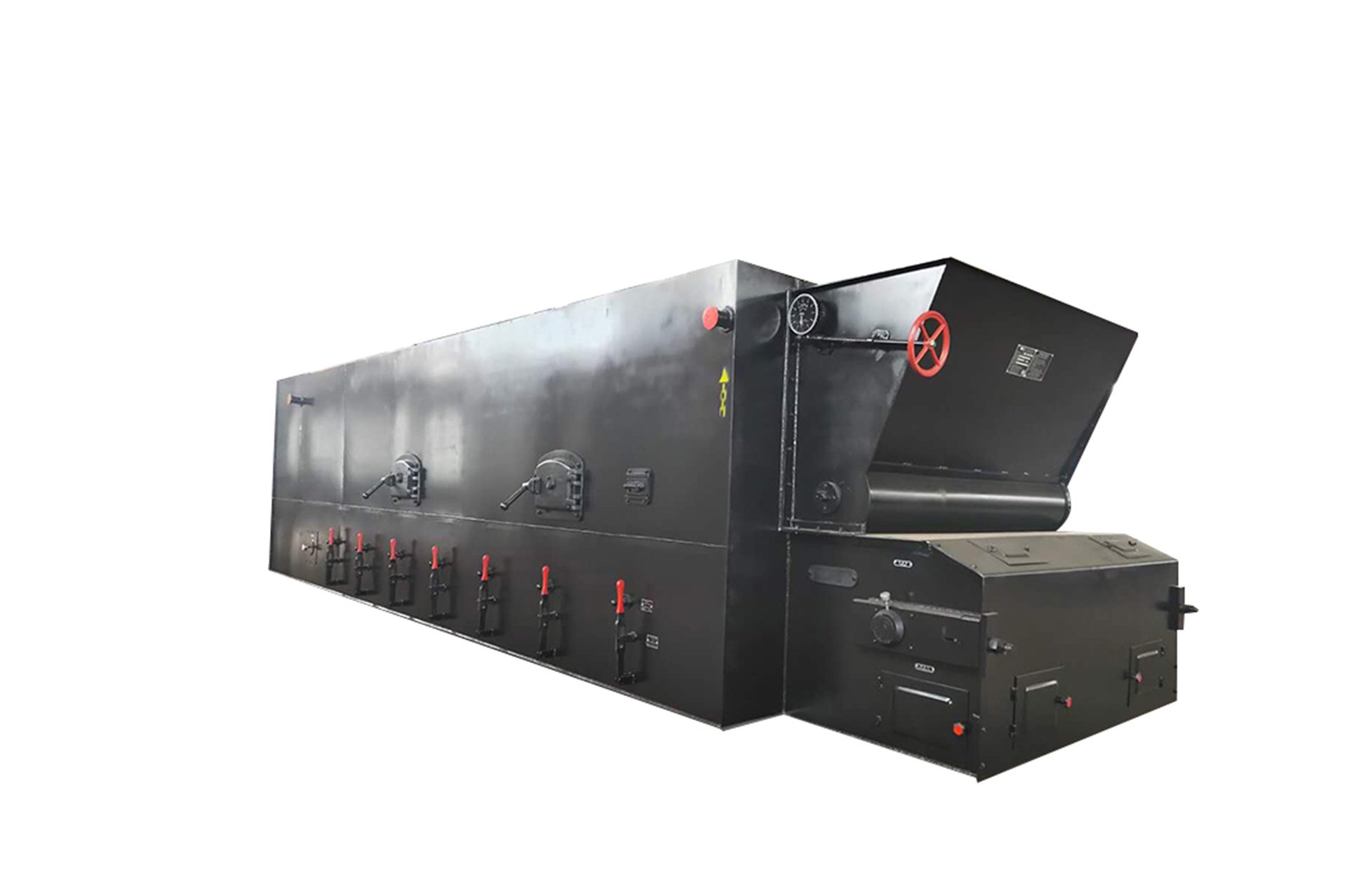

Reciprocating Grate or Chain Grate: One Difference Explains the Rest
A chain grate carries the coal along with it, so the coal barely moves relative to the bars; a reciprocating grate slides its bars back and forth under the coal, crowding and stirring the bed. The difference looks small, yet fuel flexibility, cooling conditions and maintenance focus all follow from it.
Chain grate: mature and steady, for well-behaved coal
A chain grate runs as a loop. After the bars pass the combustion section they go down to the return run and get one chance to cool. The coal travels with the grate and keeps its relative position, so combustion proceeds in sections along the length.
The design is mature and runs steadily, and it does well when the coal type and particle size stay stable. The price is sensitivity to coal quality: coal with a lot of fines, high ash or a low ash fusion temperature tends to fall through and slag, and carbon in the ash rises with it.
Reciprocating grate: it stirs the bed itself, for coal that misbehaves
The moving bars of a reciprocating grate slide back and forth over the fixed bars, pushing the coal down while crowding and turning the bed. Fresh coal is pushed onto hot burning coal, and on the return stroke hot particles are carried back under the fresh coal, so the bed ignites from both sides.
Our own material states that the inclined reciprocating grate handles class II bituminous coal, class I bituminous coal, lignite and lean coal, and suits high-moisture, high-ash, low-calorific and easily caking coal as well. With sensible air distribution and low air leakage, carbon in the ash is generally 18%–20%, which is 5%–10% lower than the ash from a hand-fired furnace.
| Item | Chain grate | Reciprocating grate |
|---|---|---|
| Bar condition | Runs as a loop with cooling on the return run | Fixed in moving and stationary frames, no return cooling, permanently hot |
| Movement against fuel | Coal travels with the grate, relatively static | Bars slide under the bed, crowding and turning it |
| Fuel flexibility | Coal of stable type and particle size | High-moisture, high-ash, low-calorific and caking coal, and biomass |
| Maintenance focus | Wear of chain, bars and side seals | Bars, moving frames, rollers and drive parts |
How to choose
Start with fuel stability. A fixed coal type with acceptable particle size and a reasonable ash fusion temperature is easier on a chain grate, while mixed coal supplies, poor coal or biomass co-firing point to a reciprocating grate.
Then look at how often load has to be adjusted. A reciprocating grate adjusts output through stroke and speed and covers a wider range, while a chain grate works through bed depth and grate speed and has fewer levers.
Then maintenance. Chain and bars on a chain grate are replaced as a run once worn, while bars, rollers and side seals on a reciprocating grate are replaced piece by piece, which is more flexible on site. A reciprocating grate does have more moving frames and drive parts, so there are more inspection points.
Last, rating and space. Our reciprocating grates cover 1–200 t/h, and the chain grates have their own table of ratings and structural data, so both tables should be read together.
We supply both grate families by series, dispatched from a partner factory, and we can match a grate model to the moisture, ash, ash fusion temperature and particle size of your fuel, with grate bars and structural parts complete for the same series.