
Technical Analysis of Active and Passive Chain Grate Bars
Chain belt chain grate is the core combustion and conveying equipment for small and medium-sized coal-fired and biomass layer-fired boilers. The complete grate is composed of active grate bars (drive bars) and passive grate bars (driven bars) connected in series in an alternating pattern. The two differ completely in structure, load-bearing logic, and functional use, with clear division of labor and mutual cooperation, jointly achieving the full process of fuel conveying, ventilation and combustion, sealing and leakage prevention, and slag removal. The selection, material matching, and wear patterns of the two directly determine the operational stability, service life, and energy consumption level of the grate.
I. Core Definitions and Division of Labor
1. Active Grate Bars (Drive and Load-Bearing Core)
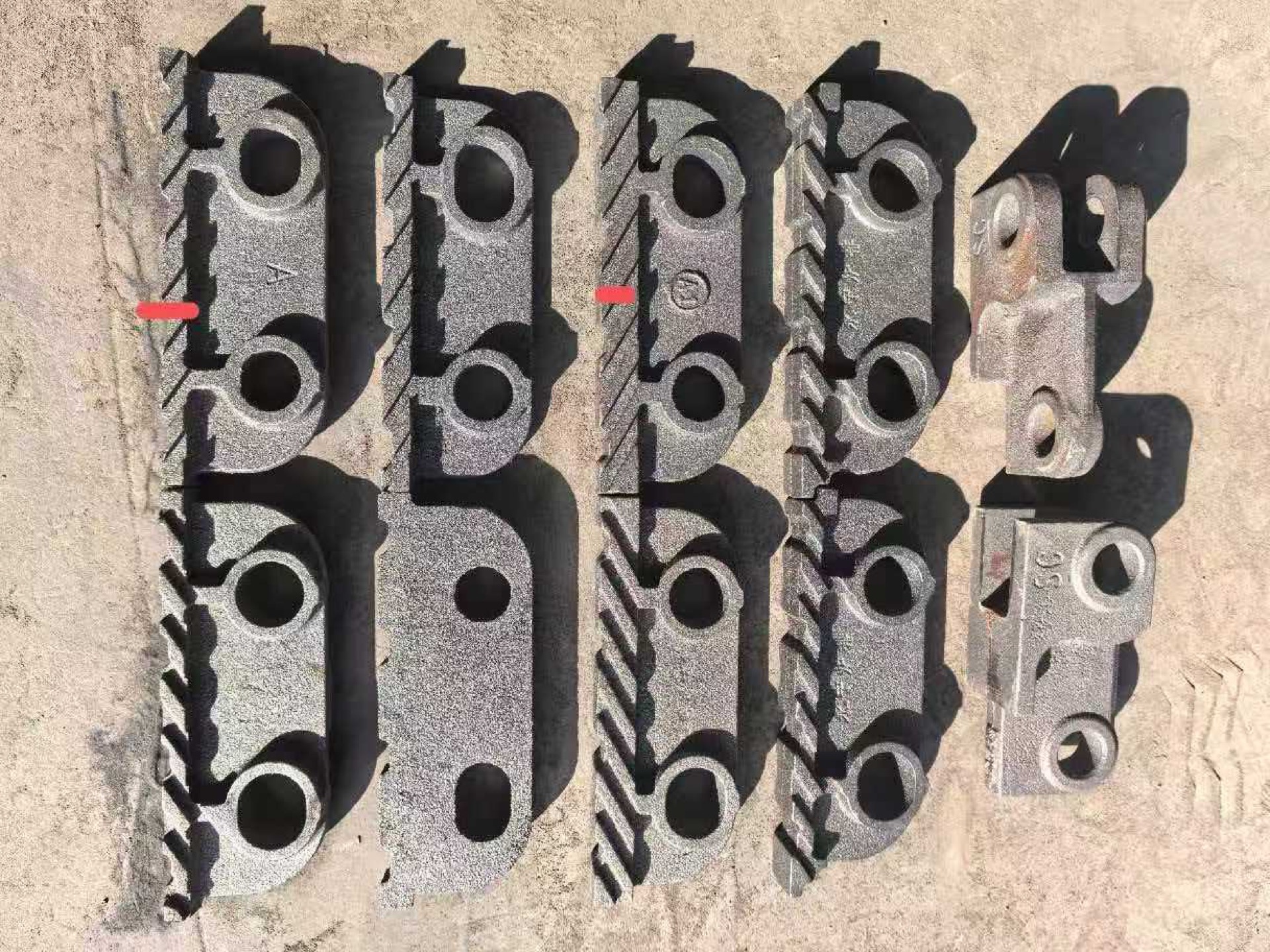
Active bars are the power-bearing components of the chain belt grate, featuring built-in pin hinge structures. They are connected in series by round steel tie rods to form an integral chain belt, meshing with the front sprocket for transmission, serving as the load-bearing traction skeleton of the entire grate. They bear tension, friction, and mechanical impact throughout operation, driving all passive bars to move synchronously at a uniform speed to achieve overall cyclic operation of the grate. Active bars are few in number but carry large loads per bar, making them the core mechanically stressed components of the grate structure.
2. Passive Grate Bars (Sealing and Combustion Core)
Passive bars have no independent transmission structure and rely entirely on active bars for traction and follow-up movement. They are densely arranged between active bars, occupying the vast majority of the grate area. Their core function is to lay flat and support the fuel, form uniform ventilation gaps, seal the air chamber, and prevent air bypass, coal leakage, and air leakage, ensuring stable combustion in the furnace. Passive bars are numerous and cover a wide area; they are the high-temperature combustion components in direct contact with flame and ash.
II. Structural and External Differences
Active Grate Bars
- Thickened structure with high strength, featuring built-in double-lug hinge pin holes, suitable for tie rod series connection and sprocket meshing transmission;
- Narrow plate face, large thickness, high rigidity, with excellent resistance to tension, torsion, and mechanical fatigue;
- Smaller ventilation gaps, prioritizing structural strength and transmission stability, with ventilation as a secondary function;
- Robust overall structure, resistant to deformation and fracture, suitable for long-term continuous mechanical operation.
Passive Grate Bars
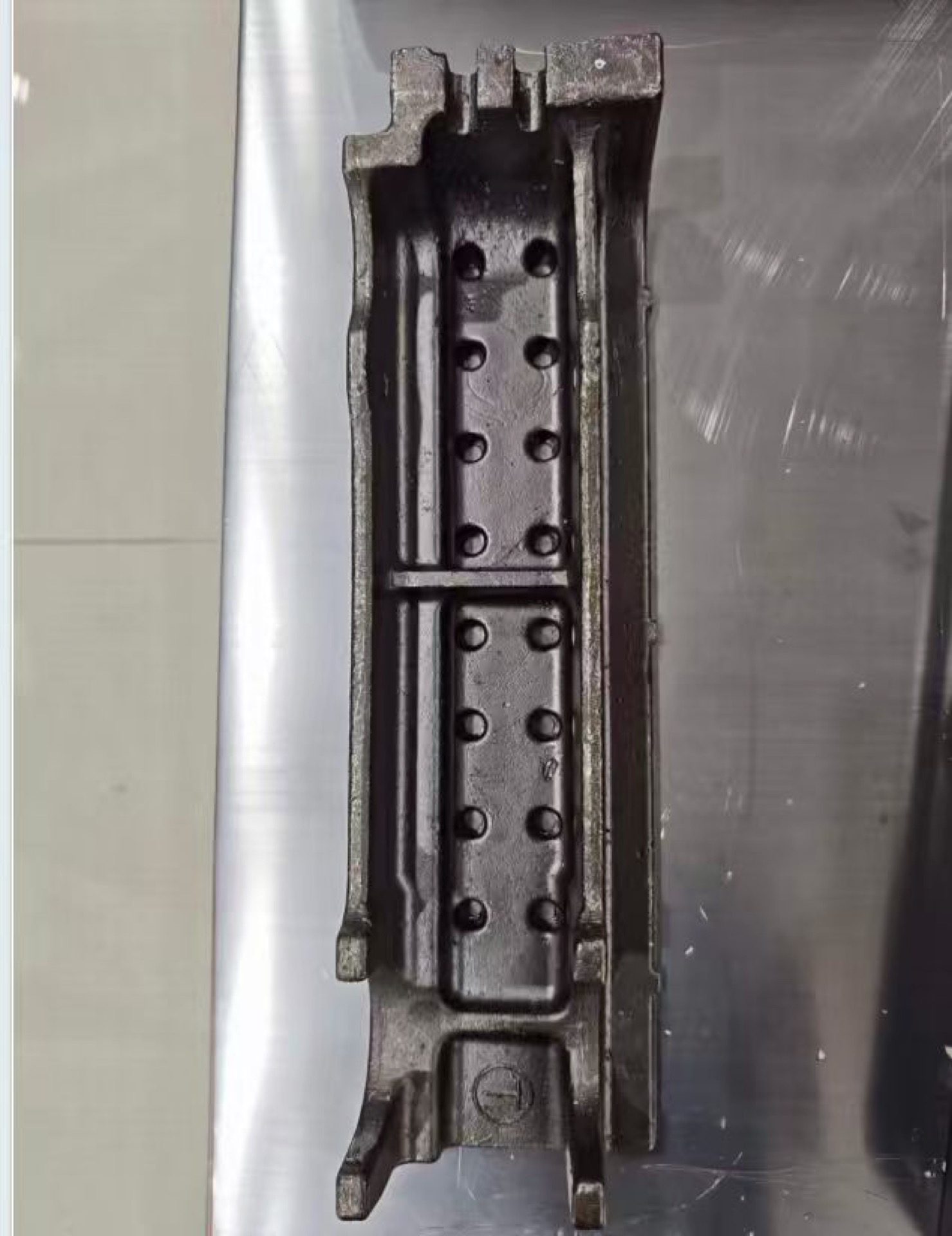
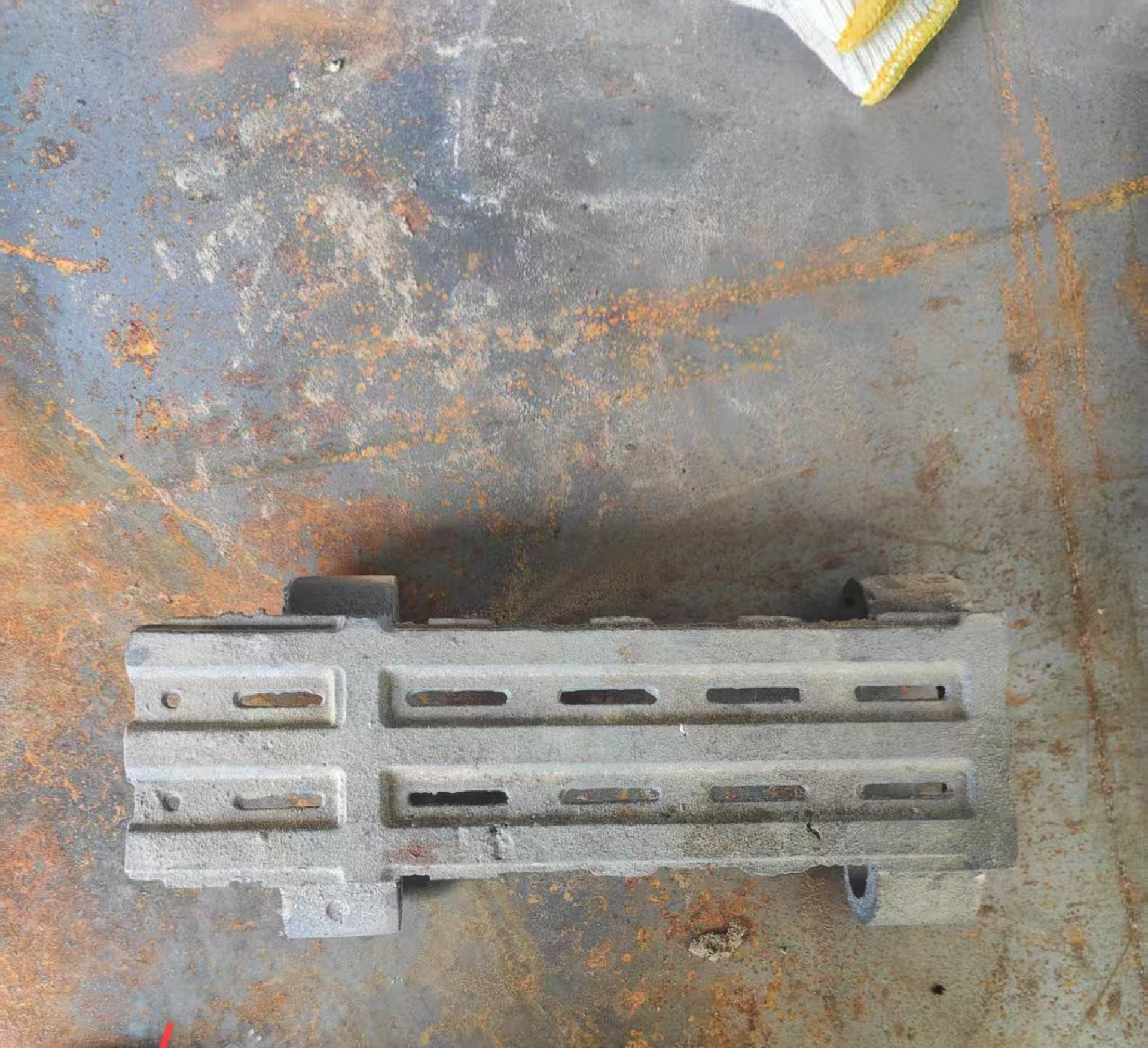
- Wide and thin plate face, no transmission hinge structure, profile conforms to sealing design, mostly featuring flat lap and S-type lap structures;
- Bars interlock tightly to form a labyrinth seal structure, effectively blocking air chamber cross-leakage and reducing coal leakage and fly ash;
- Uniform and regular ventilation gaps, precisely matching primary air distribution to ensure adequate oxygen supply for fuel layer combustion;
- Covers the main combustion area of the grate, directly enduring high-temperature flame, ash erosion, and thermal radiation.
III. Material Selection Standards (Industry Standard)
Active Bar Materials (Prioritizing Toughness, Tensile Strength, and Impact Resistance)
The core requirement for active bars is mechanical performance, with high-temperature resistance as secondary. The industry standard is malleable cast iron KTH350; for high-strength conditions, ductile cast iron QT450/QT500 is selected; for heavy-load high-temperature conditions, carbon cast steel ZG230-450 can be used. These materials have good toughness and high tensile strength, resistant to brittle fracture and deformation from reciprocating traction and mechanical vibration, suitable for 24-hour continuous transmission operation.
Passive Bar Materials (Prioritizing High-Temperature Resistance, Oxidation Resistance, and Corrosion Resistance)
Passive bars operate long-term in high-temperature combustion environments, with core requirements for high-temperature stability. The standard for conventional conditions is gray cast iron HT200; the preferred choice for mainstream coal and biomass boilers is silicon 5 heat-resistant cast iron RTSi5 (optimal at 750–850°C); for high-sulfur fuel and high-temperature furnace conditions, chromium-series heat-resistant cast iron RTCr2/RTCr16 is selected, effectively resisting high-temperature oxidation, ash corrosion, and thermal shock cracking.
IV. Core Functions and Operating Performance
Core Functions of Active Grate Bars
- Power traction: Meshes with the sprocket, bears the tension of the entire grate belt, drives the grate to circulate, and conveys fuel rearward;
- Structural positioning: Fixes the overall spacing and shape of the grate, preventing the grate belt from running off-track, loosening, or jamming;
- Mechanical wear resistance: Endures pin reciprocating friction and sprocket meshing impact, ensuring transmission system stability. Wear characteristics: Very few burnout failures; failures are mostly wear, loosening, deformation, or fracture — mechanical wear, with longer service life.
Core Functions of Passive Grate Bars
- Fuel support: Large-area flat laying supports coal beds and biomass fuel layers, ensuring uniform fuel distribution;
- Air distribution and combustion: Uniform ventilation gaps achieve zoned air distribution, ensuring stable combustion throughout drying, ignition, and burnout;
- Sealing and energy savings: Blocks air chamber cross-leakage and grate air/coal leakage, reducing fan energy consumption and fuel loss;
- Temperature and corrosion resistance: Faces high-temperature flame and ash erosion directly, maintaining long-term high-temperature operational stability. Wear characteristics: Minimal mechanical wear; primary wear is high-temperature oxidation, scaling, corrosion, and thermal shock cracking — high-temperature wear, with replacement frequency higher than active bars.
V. Service Life and Replacement Patterns
- Active grate bars: Service life of 2–3 years under normal conditions; primary wear is pin hole wear, tensile deformation, and brittle fracture; no frequent replacement needed.
- Passive grate bars: Service life of 12–24 months under conventional RTSi5 material conditions; reduced to 8–12 months under high-temperature, high-sulfur, or wet fuel conditions; these are the main wear-prone components of the grate.
VI. Selection Summary (Practical Engineering Guideline)
Active bars: focus on toughness and tensile strength, ensuring transmission and preventing fracture; Passive bars: focus on heat and corrosion resistance, ensuring combustion and preventing air leakage.
For ordinary dry/wet fuels and conventional furnace temperatures: KTH350 active bars + RTSi5 passive bars is the most cost-effective combination; For high-sulfur, high-temperature, or inferior fuel conditions: upgrade to chromium-series heat-resistant cast iron passive bars; for heavy-load conditions, upgrade to cast steel active bars.