
What Are the Advantages and Disadvantages of Biomass Reciprocating Grates?
Advantages
Strong Fuel Adaptability Can process agricultural and forestry biomass fuels with high moisture, long fiber, irregular shape, low calorific value, and high ash (wood chips, straw, bark, rice husks, bagasse, etc.), suitable for mixed biomass with unstable quality, making up for the shortcoming of chain grates that tend to coke and smolder when processing such fuels.
Built-in Material Turning and Coke Breaking Function Movable grate reciprocating misalignment, continuously stirring the material layer, breaking up hard coke shells, improving material layer permeability, reducing coking, air blockage, and smoldering issues, increasing burnout rate, and reducing carbon content in ash.
Sectional Precise Air Distribution, Adapted to Biomass Combustion Characteristics Independent air distribution per chamber, can respectively adjust drying zone, main combustion zone, and burnout zone air volume, matching the characteristics of biomass that first dehydrates then releases large amounts of volatiles for combustion, facilitating full combustion, reducing pollutant emissions, and enabling nitrogen control and carbon reduction.
Flexible Operation Adjustment, Adapted to Variable Load Conditions
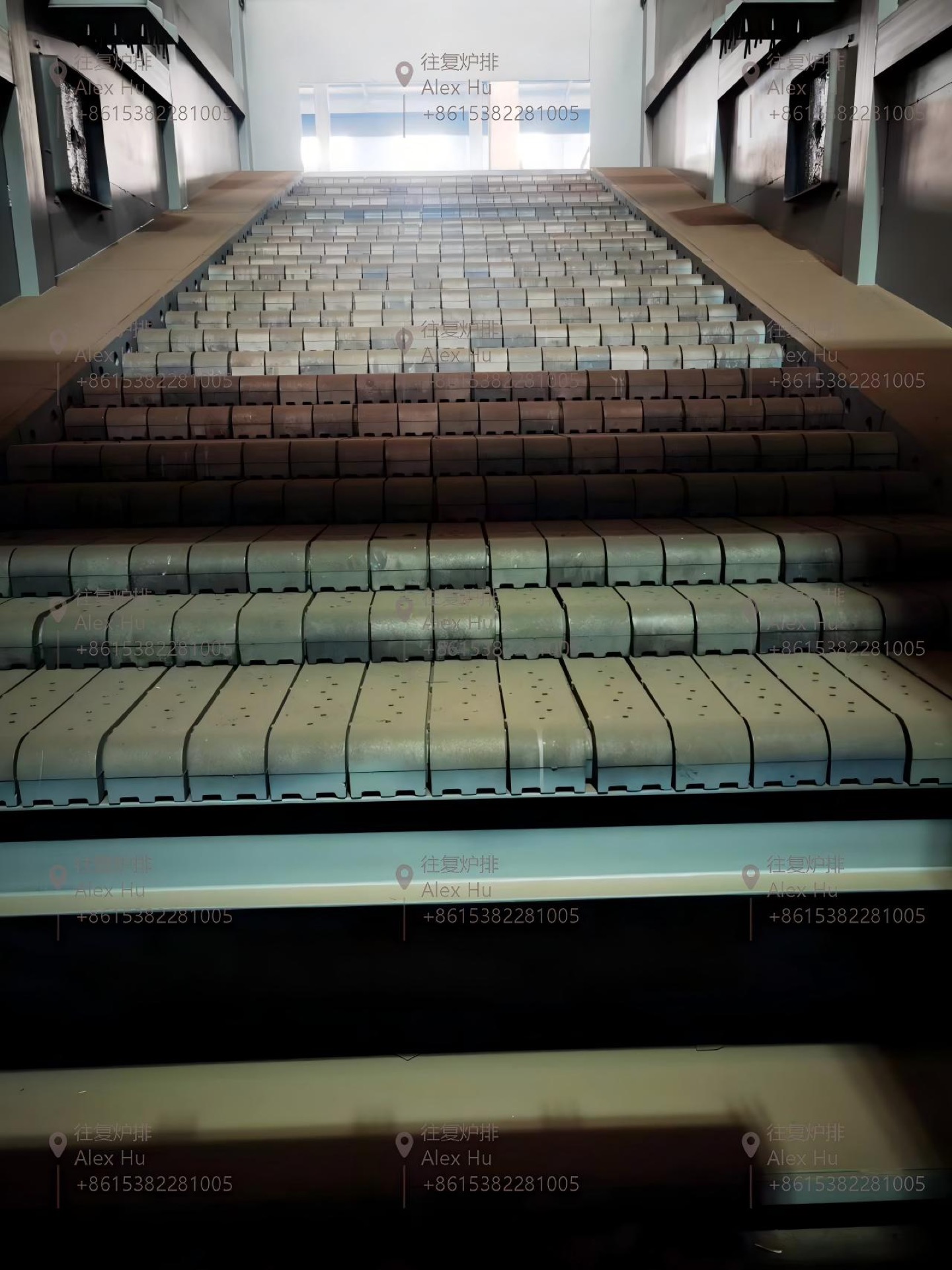
Can adjust reciprocating stroke, reciprocating frequency, feeding speed, flexibly changing fuel advancing speed and turning intensity, suitable for heating, drying, and other conditions with large load fluctuations.
Reasonable Combustion Process Inclined stepped structure, sequentially completing drying, ignition, combustion, burnout, and slag removal, adapted to the combustion law of biomass fuel that dries slowly and has high volatile content.
Disadvantages
Large Wear, Short Life, High Maintenance Workload Movable grate and fixed grate continuous sliding friction, combined with biomass alkali metal, chloride salt, sulfur high-temperature corrosion and repeated alternating thermal stress, grate bars, pin shafts, push rods are prone to wear, cracking, and jamming, requiring frequent maintenance and replacement of accessories, higher maintenance costs.
Poor Sealing, Prone to Air Leakage, Slag Leakage, and Flame Escape There are dynamic sliding gaps between fixed/movable grates, side sealing is difficult, prone to slag leakage, air leakage, local flame escape, reducing boiler thermal efficiency, side grates are prone to burnout.
Fuel Limitations Not suitable for pure fine powder fuel, prone to flame escape, local overheating and grate burnout; also not suitable for fuels with excessive hard impurities and ultra-high calorific value, prone to slag jamming and overheating damage.
Complex Structure, High Equipment Cost Equipped with reciprocating drive mechanism (crank-connecting rod/hydraulic system), multi-chamber air distribution system, structure is more complex than ordinary grates, initial investment cost is higher than conventional chain grates; transmission mechanism is prone to failure, with stalling risks.
Overall Operational Stability Weaker Than Integral Chain Grates Reciprocating alternating stress, prone to slag jamming, misalignment, and uneven wear, not suitable for ultra-large capacity boilers for long-term full-load continuous operation.
One-Sentence Summary The core advantages are suitability for inferior long fiber biomass, material turning and coke breaking, sectional air distribution, and flexible variable load adjustment; the core disadvantages are severe wear and corrosion, poor sealing, high maintenance workload, and unsuitability for pure fine powder fuel and large-scale long-term full-load conditions.